Signs your main sewer line is clogged and needs cleaning
A clogged main sewer line in a Homestead home rarely announces itself with one symptom: it shows up across several fixtures at once. This guide from MW Plumbing explains the pattern, why Homestead lines clog, and what a camera inspection adds to a clearing visit.
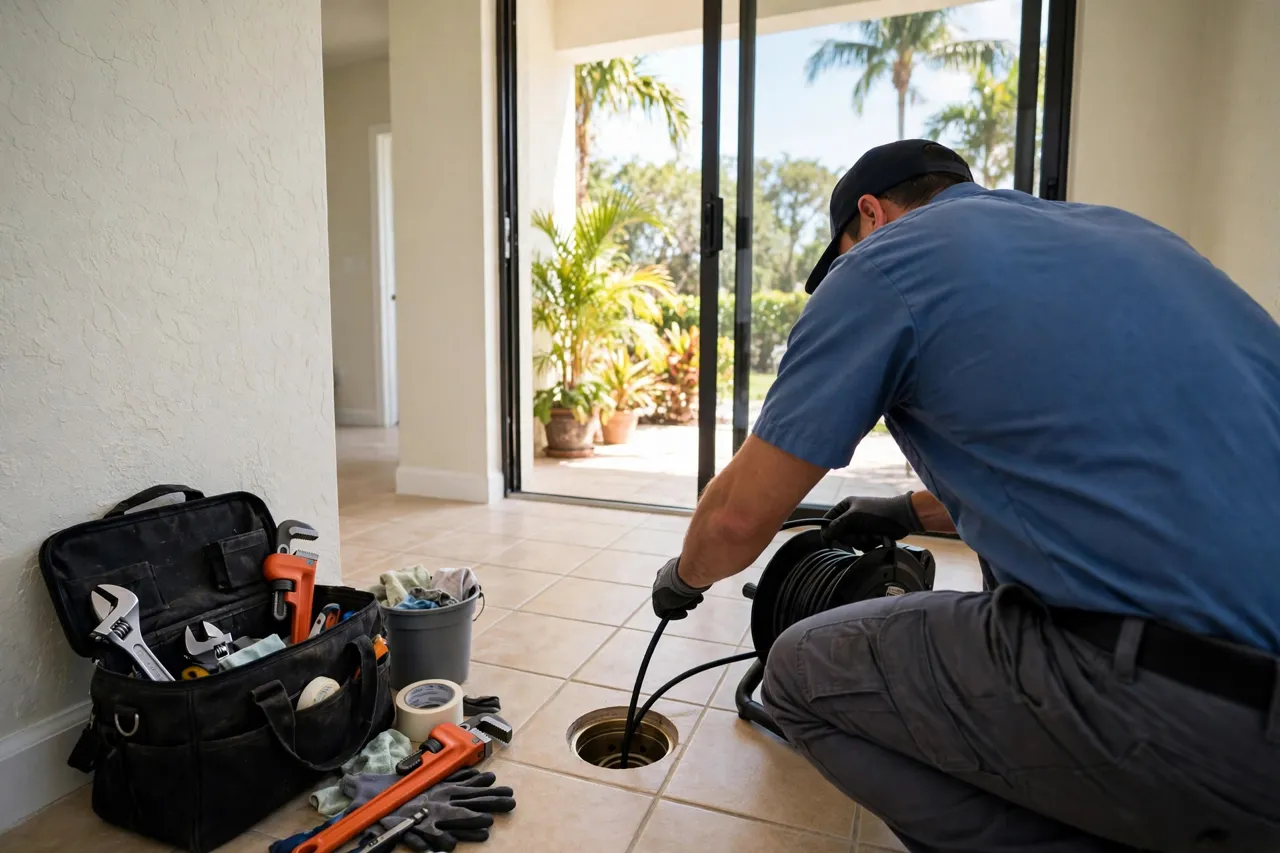
A clogged main sewer line in a Homestead home rarely announces itself with one symptom: it shows up across several fixtures at once. This guide from MW Plumbing explains the pattern, why Homestead lines clog, and what a camera inspection adds to a clearing visit.
What a main sewer line clog actually looks like
What a main sewer line clog actually looks like is a system symptom, not a fixture symptom. The main line carries every drain in the home to the street sewer or to a septic system, and sewer or septic varies by street in South Dade, so tell the plumber what your home has when you call. When that shared line restricts, the lowest fixture suffers first: a shower fills when the toilet flushes, or a floor drain burps when the washing machine drains.
That shared behaviour is the diagnostic clue. A single slow sink is a local clog. A home where the toilet gurgles, the tub drains slowly, and the kitchen sink backs up together has a main-line problem, and clearing one fixture will not fix it.
The seven signs homeowners miss
- Several fixtures slow at once. The strongest main-line signal there is.
- Gurgling when a toilet flushes. Air trapped by a restriction escapes through traps.
- Backups in the lowest fixture. Water seeks the lowest outlet when the main line is restricted.
- Sewage odour indoors. A dry trap can smell, but a persistent odour with slow drains points deeper.
- Recurring clogs. A clog that returns weeks after clearing was never fully cleared, or the line is damaged.
- Wet patches or lush grass over the lateral. A leaking lateral feeds the lawn in a line-shaped pattern.
- Toilet water level changes. A level that rises and falls without flushing suggests pressure changes in the main line.
Why Homestead sewer lines clog more than you'd think
Why Homestead sewer lines clog more than you'd think has three drivers. First, tropical vegetation: roots seek the moisture in older laterals and enter through gaps and cracks, then grow into mats that catch everything else. Second, older materials: pre-1975 cast iron and clay laterals corrode, crack and shift, giving roots their entry points. Third, the wet season: a high water table and heavy rain raise groundwater pressure and can push a marginal line into a backup.
What goes down the drain completes the picture, which is why the next section matters as much as the roots.
Older clay and cast iron laterals
Older laterals were not built for today's root pressure or today's loads. A cast iron lateral that has corroded thin will admit roots at joints, and a clay lateral can shift at a joint after soil movement, creating a lip that catches paper and waste. A camera inspection shows which sections are affected, so a clearing visit can be followed by a repair plan rather than another clearing in a few months.
Root intrusion
Roots enter through the smallest opening and grow where the water is. Cutting them clears the line, but it does not seal the entry point, so root problems recur on a cycle until the damaged section is repaired or lined. Ask for camera footage after a root clearing: it shows whether you have a maintenance cycle or a repair candidate.
What actually goes down the drain
Grease, wipes, even those labelled flushable, and fibrous foods build the mass that a root mat or a bellied section catches. Grease is the worst offender in a kitchen line: it cools, coats, and narrows the pipe until a normal load backs up. No clearing lasts long if the inputs do not change.
How do I know if my sewer line needs cleaning in Homestead Florida?
How do I know if my sewer line needs cleaning in Homestead Florida? Look for the pattern, not one event: recurring clogs, gurgling across fixtures, and backups that hit the lowest fixture first. Then get the pattern confirmed. A camera inspection through the cleanout shows roots, breaks, bellies, grease and offsets directly, and it turns a clearing visit into a plan.
Our sewer line cleaning and repair in Homestead page covers clearing and camera inspection, and our video camera drain inspection in Homestead page explains what the footage actually shows.
What to watch out for: mistakes that make it worse
- Running fixtures during a backup. More water in means more water out of the lowest fixture.
- Chemical cleaner in a main line. It will not dissolve roots or a structural blockage, and it endangers anyone who opens the line next.
- Clearing without a camera. A cleared line with an unrepaired break is a recurring bill.
- Ignoring the cleanout. A buried or sealed cleanout slows every future visit. Keep it accessible.
- Planting over the lateral. New trees over a lateral line are future root work. Know where the line runs before planting.
What affects main sewer line cleaning cost in Homestead
What affects main sewer line cleaning cost in Homestead is access, blockage type, and whether camera work is included. A straightforward clearing through an accessible cleanout is a different job from a root-choked line that needs cutting and a camera pass, and both differ from a line that needs a section repaired. The cleanout location matters too: a buried cleanout adds time before the clearing even starts.
MW Plumbing quotes before work starts, so a clearing visit and any recommended camera or repair work are quoted as separate, explained steps rather than a single surprise figure.
When to call a professional
Call MW Plumbing at (786) 523-6480 if several fixtures back up at once, if sewage water appears in a fixture, if backups recur after a clearing, or if you smell sewage with slow drains. Keep people and pets away from backed-up water, stop running fixtures, and note which fixtures are affected and in what order. For homes in Princeton and the surrounding communities, see our plumber in Princeton page.
Frequently Asked Questions
What are signs of a clogged main sewer line in Homestead FL?
Several fixtures draining slowly at once, gurgling when a toilet flushes, water backing up in a low fixture such as a shower when another fixture runs, sewage odour indoors, and wet patches or unusually lush grass over the lateral line. One slow fixture is usually local; several together point at the main line.
How do I know if my sewer line needs cleaning in Homestead Florida?
Recurring clogs that return weeks after clearing, gurgling across fixtures, and backups that affect the lowest fixture first are the pattern. A camera inspection settles it: it shows roots, breaks, bellies and grease buildup directly, instead of guessing from symptoms.
Can a clogged sewer line cause health problems in Homestead?
Sewage backup brings bacteria and contaminated water into living space, so it should be treated as a health matter, not just an inconvenience. Keep people and pets away from backed-up water, do not run fixtures while the line is surcharged, and call for professional clearing and cleaning.
Who do I call for sewer line cleaning in Homestead FL?
Call MW Plumbing at (786) 523-6480. MW Plumbing is open 24 hours, every day, and serves Homestead and South Dade.
How long does main sewer line cleaning take?
It depends on the blockage and the access: a straightforward clearing through an accessible cleanout is quicker than a line that needs camera work, root cutting, or a second pass. Your plumber should explain what the first pass found before recommending further work.
Get help with plumbing in Homestead
Several slow fixtures, gurgling, and backups in the lowest fixture are the main-line pattern. Stop running water, keep clear of backed-up water, and get the line cleared and camera-checked so the next visit is a plan, not a repeat.
Call MW Plumbing at (786) 523-6480 for sewer line cleaning in Homestead. We are open 24 hours, every day.
Common questions
A few answers before you start.
Several fixtures draining slowly at once, gurgling when a toilet flushes, water backing up in a low fixture such as a shower when another fixture runs, sewage odour indoors, and wet patches or unusually lush grass over the lateral line. One slow fixture is usually local; several together point at the main line.
Recurring clogs that return weeks after clearing, gurgling across fixtures, and backups that affect the lowest fixture first are the pattern. A camera inspection settles it: it shows roots, breaks, bellies and grease buildup directly, instead of guessing from symptoms.
Sewage backup brings bacteria and contaminated water into living space, so it should be treated as a health matter, not just an inconvenience. Keep people and pets away from backed-up water, do not run fixtures while the line is surcharged, and call for professional clearing and cleaning.
Call MW Plumbing at (786) 523-6480. MW Plumbing is open 24 hours, every day, and serves Homestead and South Dade.
It depends on the blockage and the access: a straightforward clearing through an accessible cleanout is quicker than a line that needs camera work, root cutting, or a second pass. Your plumber should explain what the first pass found before recommending further work.
Need a local hand?
Need sewer line cleaning in Homestead? Call MW Plumbing.
MW Plumbing clears and camera-inspects main sewer lines across Homestead and South Dade, and quotes before work starts. Open 24 hours, every day. Call (786) 523-6480.