Hard water in Homestead: scale, water heaters and softeners
Hard water in Homestead is a Biscayne Aquifer story: groundwater flowing through oolitic limestone picks up calcium and bicarbonate, and that mineral load becomes scale on fixtures and sediment in water heaters. This guide from MW Plumbing explains the signs, the heater effects, and the softener and filtration options.
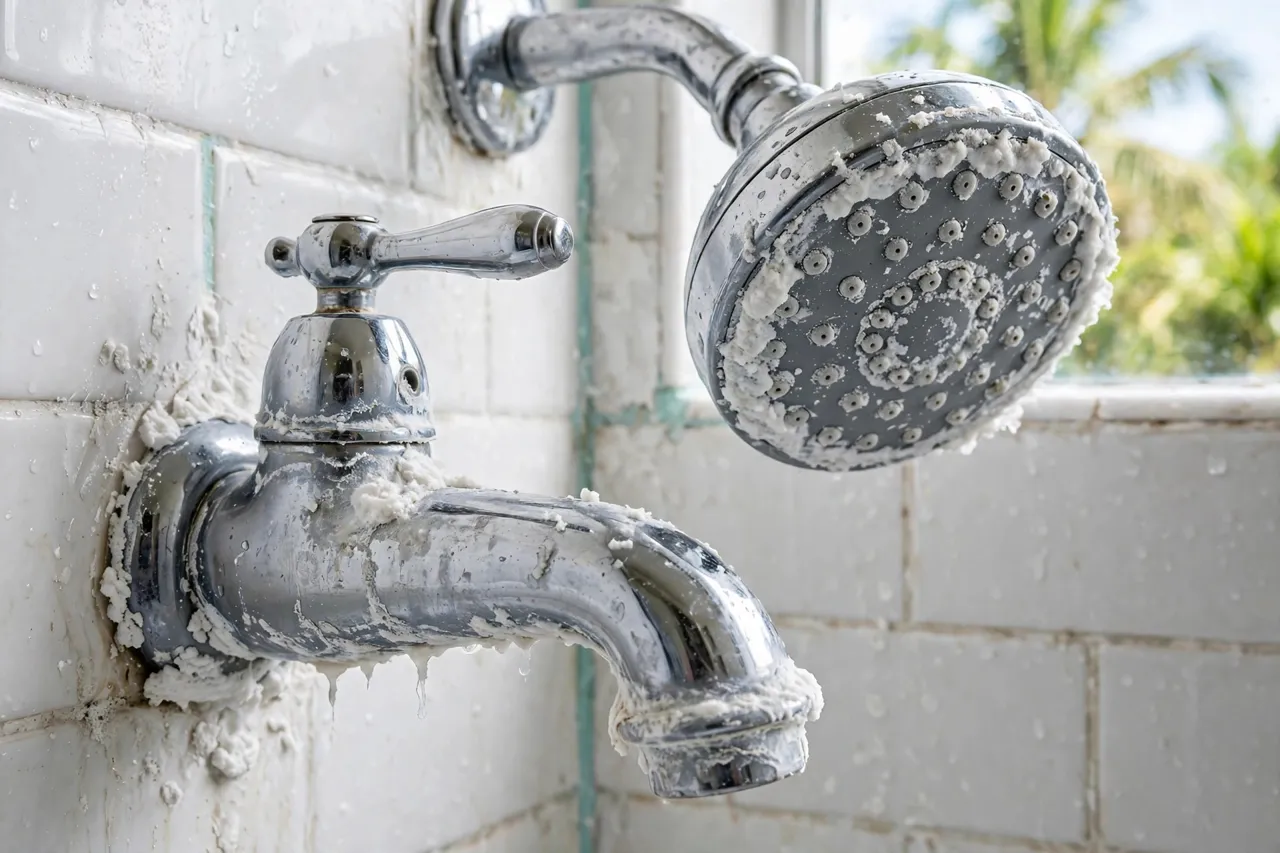
Hard water in Homestead is a Biscayne Aquifer story: groundwater flowing through oolitic limestone picks up calcium and bicarbonate, and that mineral load becomes scale on fixtures and sediment in water heaters. This guide from MW Plumbing explains the signs, the heater effects, and the softener and filtration options.
What hard water actually is in Homestead
What hard water actually is in Homestead is calcium-bicarbonate water from the Biscayne Aquifer. The aquifer's water moves through porous oolitic limestone, dissolving calcium and bicarbonate as it goes, and the City of Homestead's own utility draws from that aquifer for most of the city, with a small northeast section on a county interconnect as backup. The wider South Dade area shares the same limestone geology, so hard water is an area-wide condition.
Hardness itself is not a health hazard, and this guide does not quote a single hardness figure for Homestead-area water, because published figures conflict: they come from different sources, different test points, and different dates. What matters for your home is your own tap, and a water test settles that question directly.
Where hard water does real damage is in heating and in fixtures: every time hard water is heated, scale precipitates, and every surface it flows over accumulates mineral deposits. That slow accumulation is the whole story of this guide.
Signs of hard water in a Homestead home
- White scale on faucets and showerheads. Crust on aerators and spray faces that returns within months of cleaning.
- Spots on dishes and glass. Spotting that survives normal dishwashing and needs vinegar or a rinse aid to shift.
- Stiff laundry and dull colours. Minerals bind with detergent, so clothes feel stiff and colours fade faster.
- Soap that will not lather. Hard water fights soap and shampoo, leaving residue on skin, hair and surfaces.
- A rumbling water heater. Sediment boiling at the bottom of a tank, or a tankless unit that errors and shuts down, both point at scale.
- Fixtures losing flow. Aerators and showerheads that clog with scale and need frequent cleaning.
How hard water affects water heaters in Homestead
How hard water affects water heaters in Homestead depends on the type, but the mechanism is the same: heat precipitates scale. In a tank, scale settles as sediment that blankets the bottom, insulates the heating surface, and forces longer, hotter cycles to deliver the same water temperature. That longer cycling stresses the tank, raises running costs, and shortens the tank's life, especially once the anode rod is spent.
In a tankless unit, scale coats the narrow passages of the heat exchanger, reducing flow and efficiency until the unit errors and shuts down. Tankless units are more sensitive to scale precisely because their passages are narrower and their heating is more intense. Descaling on schedule is therefore not optional maintenance for a tankless unit in Homestead; it is the maintenance that keeps it running.
Our water heater installation and repair in Homestead page covers flushing and descaling, and our tankless vs tank water heaters guide compares the two types under hard-water conditions.
Step 1: Check your fixtures
Remove an aerator and look inside: white crust and reduced flow are the fastest hard-water test in the home. Check showerheads the same way, and note how quickly scale returns after cleaning. A fixture that scales within months is telling you the water, not the fixture, is the problem.
Step 2: Check your water heater
Listen for rumbling or popping during heating, check whether hot water runs out sooner than it used to, and ask when the tank was last flushed or the anode rod checked. A heater that has never been flushed in a hard-water home is a heater carrying sediment, whether or not it has failed yet.
Step 3: Test before you treat
Get a water test at your own tap before choosing any treatment. The test should report hardness, and ideally iron and chlorine as well, since both change the system choice. A test-first decision sizes treatment to your water; a guess sizes it to a brochure.
Softeners and filtration: the options for Homestead homes
Softeners and filtration do different jobs, and many Homestead homes need to understand both before choosing. A water softener removes calcium and magnesium through ion exchange, which is what stops scale forming on fixtures and in heaters. It does not, by itself, remove chlorine taste, sediment, or specific contaminants; those are filtration jobs.
Filtration options range from sediment and carbon filters for taste, odour and chlorine, to more specialised media for iron or other targets the test reveals. A combined approach, softening for scale plus filtration for taste, suits many homes, but the combination should follow the test: iron fouls softener resin, and chlorine degrades it, so a test that shows either changes the recommendation.
For the installation side, see our water softener installation and service in Homestead and water filtration services in Homestead pages, and for a community example, our water softener installation in Leisure City guide.
What affects softener and filtration installation scope
What affects softener and filtration installation scope is household water use, the tested hardness and iron and chlorine content, the system type chosen, and the site: drain access for regeneration discharge, a bypass loop for service, and space for the unit and any pre-filtration. A system sized to a test and to household use performs steadily; a system sized to a guess regenerates constantly or leaves scale behind.
MW Plumbing quotes before work starts, after testing and sizing, so the scope you approve reflects your home's water and use, not a standard package. If an existing softener is using excessive salt or leaving scale despite running, that is a sizing or maintenance problem worth diagnosing before replacing the unit.
Common mistakes homeowners make
- Buying on a single hardness figure. Area figures conflict. Test your own tap before choosing a system.
- Softening without filtration, or the reverse. Scale and taste are different problems; one treatment rarely solves both.
- Skipping the bypass and drain checks. A softener without a bypass is hard to service, and a drain that cannot take regeneration flow backs up.
- Ignoring the heater. A softener protects a sound heater; it does not revive a tank already full of sediment. Flush and check the heater too.
- Installing and forgetting. Salt levels, resin condition and filter changes are the maintenance that keeps treatment working.
When to call a professional
Call MW Plumbing at (786) 523-6480 for a water test and a sizing conversation before buying treatment, if scale is shortening fixture or heater life, or if an existing system is underperforming. A test-first visit prevents the most common hard-water mistake: the wrong system, sized to a guess, protecting nothing in particular.
Frequently Asked Questions
What causes hard water in Homestead FL?
Groundwater from the Biscayne Aquifer flows through porous oolitic limestone, picking up calcium and bicarbonate on the way. That mineral load is what precipitates as white scale on fixtures and inside water heaters. It is an area-wide condition in South Dade, not a problem with a single home's plumbing.
How do I know if I have hard water in Homestead?
Look for white scale on faucet aerators and showerheads, spots that survive normal dishwashing, stiff laundry, and a water heater that rumbles or needs frequent flushing. A water test at your own tap confirms it and shows what else, such as iron or chlorine, is present.
Does hard water damage water heaters in Homestead?
Yes. In a tank, scale settles as sediment that insulates the heating surface, forces longer cycles, and shortens the tank's life. In a tankless unit, scale coats the heat exchanger, narrows passages, and can trigger shutdowns. Regular flushing and descaling matter more to heater life here than in soft-water areas.
Is a water softener or a filter better for Homestead hard water?
They do different jobs: a softener removes the calcium and magnesium that cause scale, while filtration targets taste, odour, chlorine, sediment, or specific contaminants depending on the filter type. Many homes benefit from softening for scale plus filtration for taste, but the right combination follows a water test, not a generic recommendation.
Should I test my water before buying a softener in Homestead?
Yes. Published hardness figures for the Homestead area conflict because they come from different sources and test points, so a test at your own tap is the only figure that matters for sizing. A test also reveals iron and chlorine, which change the system choice.
Get help with plumbing in Homestead
Check your fixtures, listen to your heater, and test your water before choosing treatment. Scale is a measured problem with measured solutions, and the test is what turns a guess into a plan.
Call MW Plumbing at (786) 523-6480 for hard-water testing and treatment in Homestead. We are open 24 hours, every day.
Common questions
A few answers before you start.
Groundwater from the Biscayne Aquifer flows through porous oolitic limestone, picking up calcium and bicarbonate on the way. That mineral load is what precipitates as white scale on fixtures and inside water heaters. It is an area-wide condition in South Dade, not a problem with a single home's plumbing.
Look for white scale on faucet aerators and showerheads, spots that survive normal dishwashing, stiff laundry, and a water heater that rumbles or needs frequent flushing. A water test at your own tap confirms it and shows what else, such as iron or chlorine, is present.
Yes. In a tank, scale settles as sediment that insulates the heating surface, forces longer cycles, and shortens the tank's life. In a tankless unit, scale coats the heat exchanger, narrows passages, and can trigger shutdowns. Regular flushing and descaling matter more to heater life here than in soft-water areas.
They do different jobs: a softener removes the calcium and magnesium that cause scale, while filtration targets taste, odour, chlorine, sediment, or specific contaminants depending on the filter type. Many homes benefit from softening for scale plus filtration for taste, but the right combination follows a water test, not a generic recommendation.
Yes. Published hardness figures for the Homestead area conflict because they come from different sources and test points, so a test at your own tap is the only figure that matters for sizing. A test also reveals iron and chlorine, which change the system choice.
Need a local hand?
Need help with hard water in Homestead? Call MW Plumbing.
MW Plumbing tests water, sizes softeners and filtration, and maintains water heaters across Homestead and South Dade. Open 24 hours, every day. Call (786) 523-6480.